I arrived in Monte Argentario on a crisp spring morning in early 2026, expecting yet another crowded Italian coastline. What I found instead was a serene peninsula where the Tyrrhenian Sea lapped gently against unspoiled shores and the scent of wild rosemary filled the air. It felt like a secret that only a few savvy travelers had kept to themselves – exactly the opposite of the celebrity-packed Amalfi Coast I’d visited years before. If you’re hunting for an Italian escape that doesn’t drain your savings, this southern Tuscan gem is your answer.
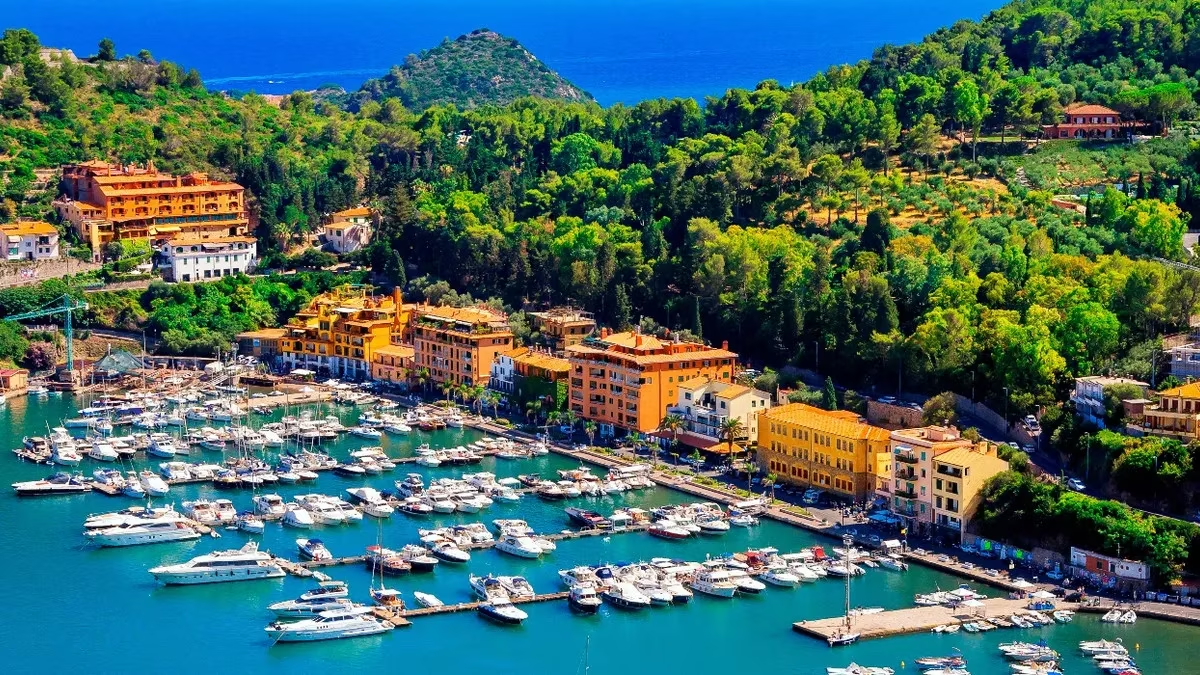
A Budget-Friendly Paradise on the Tuscan Coast
Monte Argentario sits in the Maremma region, just above Rome’s Lazio, connected to the mainland by a series of sandy isthmuses that turned an ancient island into today’s rugged peninsula. The difference from the Amalfi Coast hits you immediately: no bumper-to-bumper tourist buses, no overpriced limoncello stands, and absolutely no sense that every square meter is monetized. Here, demand remains lower because mainstream tourism still flocks to Positano or Ravello, which means accommodation, food, and activities stay affordable.
The beaches tell their own story. La Feniglia and Giannella stretch for kilometers with soft sand and pine groves, where you can park for free or a tiny fee – something unthinkable along the Amalfi Coast. Cala Piccola and Cala del Gesso offer intimate coves framed by cliffs, and even in July 2025, I never had to reserve a sunbed weeks in advance. The water is equally crystal-clear, and the sunsets? Fiery orange and pink that rival any postcard from Capri.
Accommodation: Luxury Without the Hefty Price Tag
During my stay, I tested a range of hotels just to see how far my euro could go. A luxury room with sea views and a private terrace started at around $100 per night, while a similar setup on the Amalfi Coast would easily start at $400. That’s not a typo – you can sleep in genuine opulence here for a quarter of the price. If you’re truly on a shoestring, family-run B&Bs and agriturismos scatter the peninsula, offering home-cooked breakfasts and insider tips for as little as $60 a night.
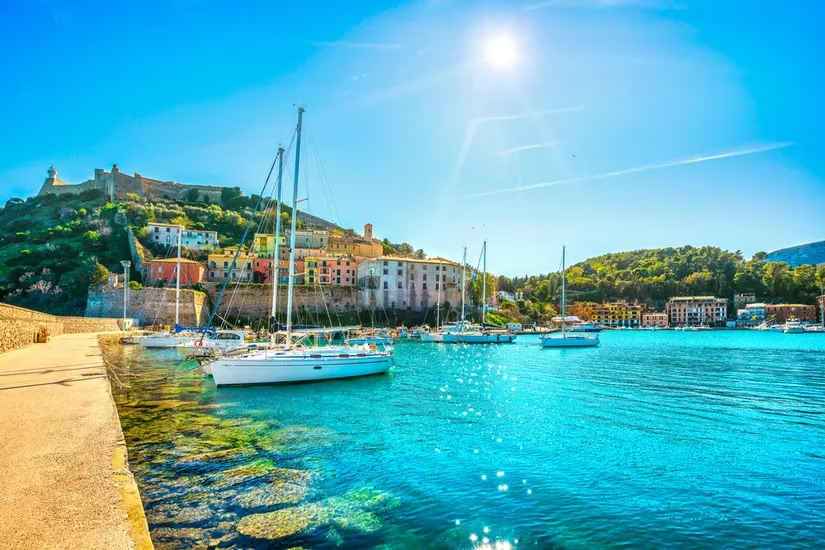
I stayed in a mid-range boutique hotel in Porto Santo Stefano, the main port town, where my balcony overlooked the marina and the Fortezza Spagnola. The owner, a third-generation fisherman’s daughter, still runs the front desk and treats every guest like a distant cousin. That kind of genuine warmth is rare in the slick, transactional hospitality of Italy’s more famous coasts.
Dining: From Street Food to Local Delicacies
Food was the revelation that sealed my love for Monte Argentario. One afternoon in Porto Santo Stefano, I followed the smell of frying fish to a street stall right on the waterfront. For €5, I got a paper cone of freshly caught anchovies and squid, crispy and golden, seasoned with just lemon and salt. Street food like that doesn’t just save money; it makes you feel like a local.
Even sit-down trattorias kept my wallet happy. The cuisine leans heavily on Tuscan traditions and the day’s catch – think pici pasta with wild boar ragù, or grilled sea bass drizzled with locally pressed olive oil. A three-course dinner with wine rarely exceeded $35. Compare that to the Amalfi Coast, where similar meals often climb past $70 with a tourist surcharge. The lack of Michelin-starred pretension here is actually a bonus: you eat where the fishermen eat, and the flavors are all the more authentic for it.
Must-Visit Spots in and Around Monte Argentario
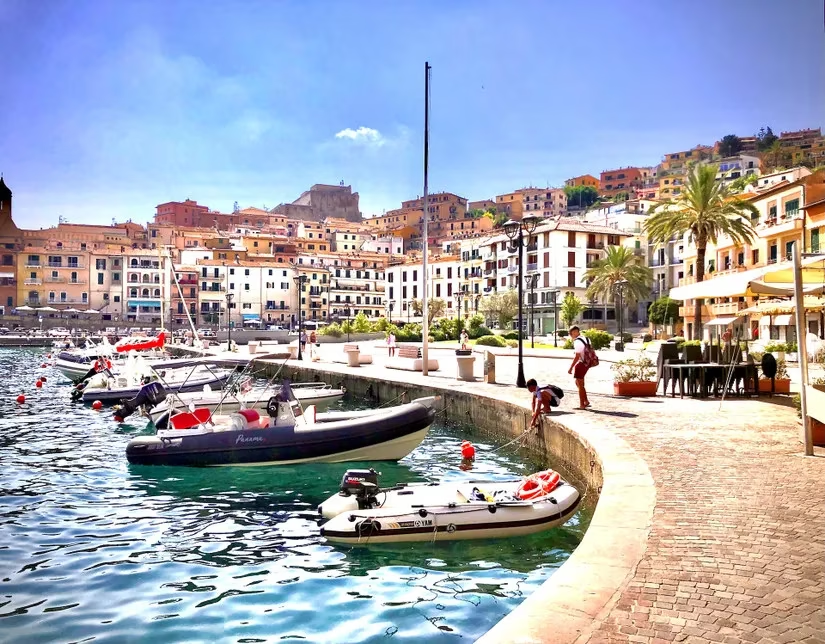
The peninsula has two focal points. Porto Ercole, once a sleepy fishing village, has evolved into an upscale yet still relaxed resort. I wandered its small marina, noting the superyachts that dock discreetly – yes, celebrities do hide here, but they don’t demand velvet ropes. Porto Santo Stefano is livelier, with a ferry port, shops, and a deep history. Its Spanish fortress is open to exploration, and every August 15th, a regatta turns the town into a carnival, ending with fireworks over the water.
Venture farther and you’ll find treasures my rental car made easy to reach. An hour southeast, Saturnia’s thermal springs invite a free soak in warm, mineral-rich waters tumbling over travertine rocks – no entry fee as of my 2026 visit. The hill town of Pitigliano, perched dramatically on tufa cliffs, reveals Etruscan catacombs and the “Little Jerusalem” district with its Jewish museum. I spent a quiet afternoon there, learning how the community preserved rituals through centuries.
Then there’s Giglio Island, only an hour by ferry from Porto Santo Stefano. Despite its tragic association with the 2012 Costa Concordia disaster, the island today is pure tranquility. I hiked from Giglio Castello to Giglio Campese, passing vineyards that produce the local Ansonica wine, and ended the day with Panficato, a dense sweet bread with figs and nuts. The Hotel Saraceno offered a restful night for under $120 – another win for Monte Argentario’s accessibility.
Best Times to Visit and How to Get Around
If you want the absolute cheapest deal, aim for mid-November. That’s the sweet spot when airfares and hotel rates bottom out, yet the weather often remains mild enough for long coastal walks. Broader shoulder periods run from October 1st to December 16th and from January 1st to April 1st. I traveled in early March and had entire beaches to myself, with daytime temperatures around 15°C – perfect for exploring without sweating through my shirt.
Getting around is another area where costs stay low. I rented a small Fiat for about $30 a day and easily looped the whole peninsula, stopping at viewpoints that lack any parking meter. Public buses connect Porto Ercole, Porto Santo Stefano, and the main beaches, but a car gives you freedom to discover hidden coves. Ferries to Giglio Island run frequently and return tickets cost less than a taxi ride in Rome.
A Hidden Treasure Worth Discovering
Monte Argentario may never dominate Instagram the way Positano does, and that’s exactly its charm. It’s a place where you can experience the Italian coastline in its raw, uncommercialized form – where a $100 hotel room buys you a front-row seat to a spectacular sunset, and a cone of fried fish tastes like the Mediterranean itself. From the majestic Fortezza Spagnola to the free thermal waters of Saturnia, every experience felt personal rather than packaged. If you’re planning an Italian holiday in 2026, skip the crowded, expensive icons and let this Tuscan hideaway work its quiet magic. You’ll return home with money still in your pocket and memories no postcard can capture.
Loading comments...