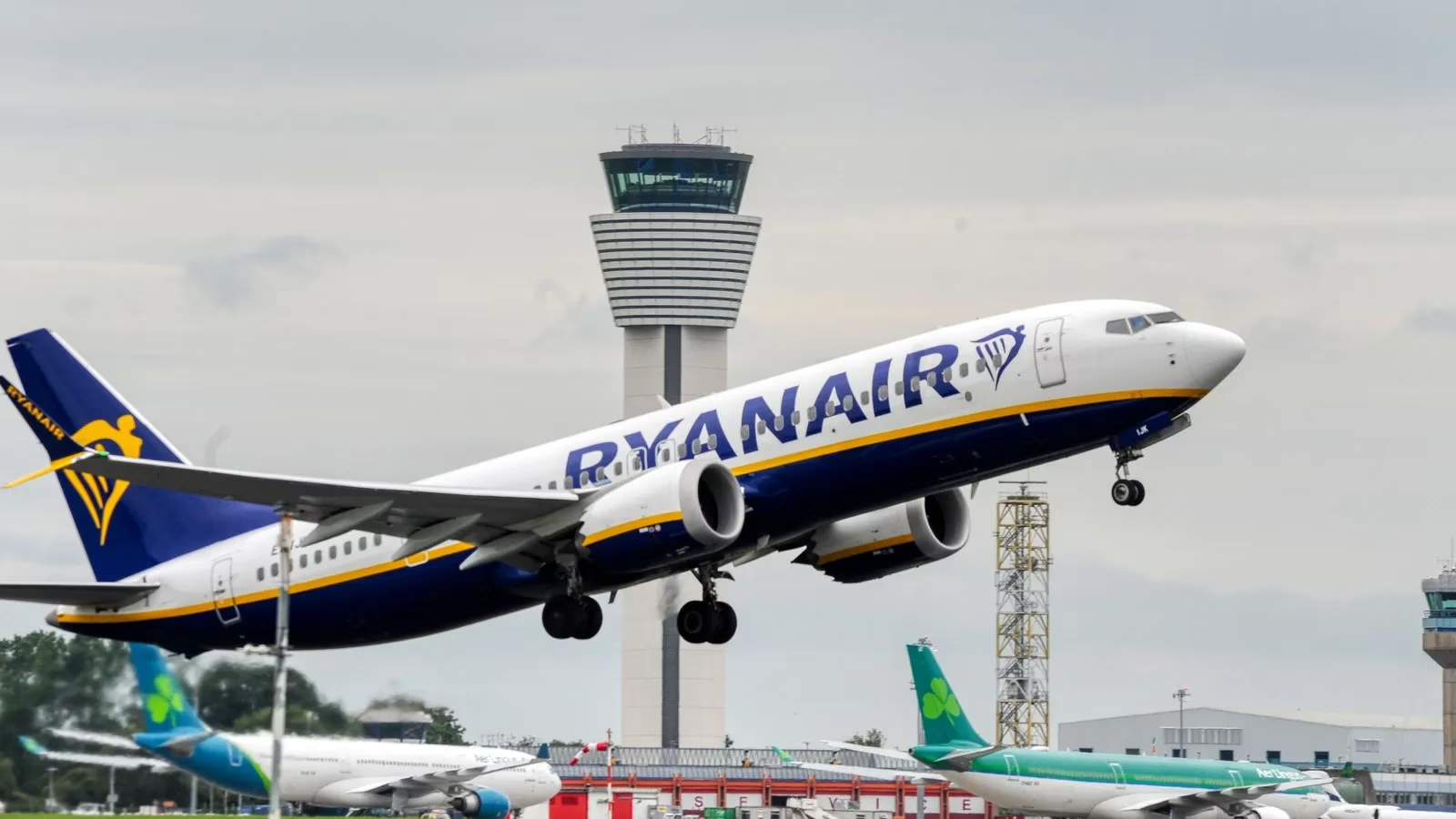
The Spanish skies are buzzing with controversy in 2026, but it's not about turbulence—it's about fines. The Spanish Ministry of Consumer Affairs has dropped a financial bombshell, imposing a collective penalty of approximately $180 million on five major low-cost carriers. Why? For what the government calls "abusive practices" related to charging customers extra fees where none should have applied. The airlines—Ryanair, easyJet, Norwegian, Volotea, and Vueling—are now in a full-blown legal dogfight with authorities, fuming over sanctions they claim are unjust. This move by Spain isn't just a slap on the wrist; it's a seismic shift in how budget airline fees are being scrutinized across Europe.
The Breakdown: Who Got Fined What? 😱
Let's talk numbers, because these fines are absolutely staggering. The Ministry didn't hold back, and the penalty distribution tells a clear story:
| Airline | Fine Amount (Euros) | Notable Rank |
|---|---|---|
| Ryanair | €107,775,777 | 🥇 Highest Fine |
| Vueling Airlines | €39,264,412 | 🥈 Second Highest |
| easyJet | €29,094,441 | 🥉 Third Place |
| Norwegian | €1,610,001 | Fourth |
| Volotea | €1,189,000 | Fifth |
Ryanair, the Irish ultra-low-cost giant, is shouldering the lion's share of the blame and the bill. That's over 107 million euros! Vueling, a Spanish carrier itself, came in a distant but still painful second. The sheer scale of these penalties shows how seriously the Spanish government is taking what it views as systemic exploitation of passenger rights.
So, What Were the "Abusive Practices" Exactly? ✈️
The Ministry's complaint reads like a checklist of traveler frustrations. The airlines were accused of violating customer rights through a series of controversial charges. We're talking about fees for things that, according to Spanish law, should be basic services. The main offenders included:
-
Charging for larger carry-on bags that technically still fit within cabin policies.
-
Imposing fees to reserve seats specifically for passengers traveling with disabled persons or young children. Imagine being charged extra to sit next to your own kid! 👶
-
Demanding payment for boarding pass print-outs at the airport.
-
Refusing cash payments at check-in desks, forcing digital transactions.
-
Not allowing passengers to purchase items like food or water on board with cash.
The government's stance is clear: these aren't optional "extras"; they're essential parts of the air travel service that airlines are using to generate "illicit profit." As a result, Spain has now banned all five airlines from imposing these specific surcharges at any airport within the country.
The Airlines Fight Back: "We Will Defend Ourselves!" ⚖️
Unsurprisingly, the airlines are not taking this lying down. Representatives from all five carriers are reportedly fuming. Their argument? That these fines directly contradict their established and transparent bag and cabin policies, which customers agree to when they book those famously low fares. They view the penalties as an outrageous overreach that misunderstands the low-cost business model.
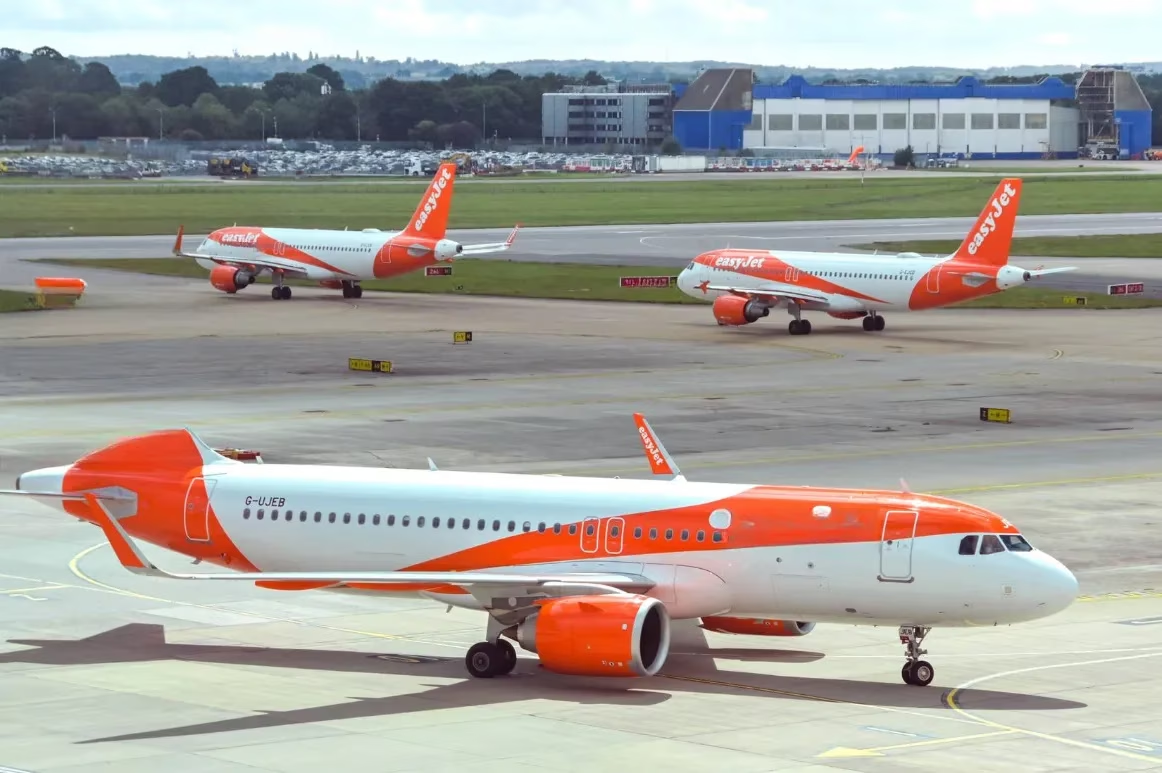
A spokesperson for easyJet has already fired a warning shot, issuing a statement that the airline plans to "vigorously defend" itself against the sanctions. This sets the stage for a lengthy and costly legal battle in Spanish and potentially European courts. Ryanair, no stranger to regulatory fights, is likely gearing up for a similar aggressive defense. The core of their argument will be that their fee structure is clearly communicated and that passengers are paying for a bare-bones base fare with optional add-ons—a model that has defined budget travel for decades.
A Growing Trend: Europe Cracks Down on Fee Frenzy 🇪🇺
Here's the crucial context: Spain is not the first EU country to take a stand. This is part of a much larger continental crackdown on what regulators see as predatory practices by low-cost carriers. Just look at the recent past. In August of this year, Italy banned Ryanair for its fees on seat reservations next to children under 12 or people with disabilities. Ryanair appealed that decision in Italian courts... and lost. That precedent is now hanging over the current Spanish case like a dark cloud for the airlines.
The message from European authorities is becoming unified and loud: the race to the bottom on ticket prices cannot be subsidized by charging passengers for basic necessities, accessibility, or family cohesion. This represents a fundamental challenge to the low-cost airline playbook. For years, the model has been to lure customers with impossibly cheap headline fares and then make profit on ancillaries—bags, seats, priority boarding. Now, governments are drawing a line in the sand about what constitutes a fair ancillary versus an abusive, mandatory fee.
What Does This Mean for Travelers in 2026 and Beyond? 🤔
For the average flyer, this is a watershed moment. On one hand, it's a huge win for consumer rights. The era of being nickel-and-dimed for sitting with your family or printing a boarding pass might be coming to an end, at least in some European markets. Travelers can hope for more transparency and fairness in what they're actually paying for.
However, there's a big, looming question: Will this lead to higher base fares? 🤨 Airlines argue that their low initial prices are only possible because they can charge for extras. If regulators strip away significant revenue streams from those extras, the companies may have no choice but to increase the price of the ticket itself. The dream of a €10 flight across Europe could become even rarer.
The coming months will be critical. As the airlines mount their legal defenses and the Spanish Ministry holds its ground, the outcome will set a powerful precedent. Will other EU nations like France or Germany follow Spain and Italy's lead? Will the classic low-cost model have to be reinvented? One thing's for sure: the fight over those extra few euros for a cabin bag has escalated into a multi-million euro battle that will reshape European air travel. Fasten your seatbelts, everyone—it's going to be a bumpy legal ride. ✈️⚖️
Industry insights are provided by GamesIndustry.biz, and they help frame Spain’s €180M penalty wave as part of a broader regulatory squeeze on “hidden” revenue models—much like how games publishers have been pushed to clarify microtransactions and optional add-ons. From a market-structure perspective, the clash between headline-low fares and fee-heavy monetization mirrors wider consumer-protection scrutiny: when regulators redefine what counts as a “basic service,” companies often respond by reshaping pricing transparency, bundling, and baseline ticket costs across the sector.
Loading comments...