In 2026, the remote work revolution has fully blossomed. I’ve traded my old cubicle for a life of constant motion, laptop in tow, chasing Wi-Fi and wonder across the globe. The days of “work from home” are long gone—now it’s “work from anywhere,” and I’ve discovered that you don’t need a Silicon Valley salary to live well. In fact, I’ve spent the past year hopping between ten countries where I consistently spent less than $1,000 a month, sometimes far less.

My journey taught me that affordable living isn’t about sacrifice—it’s about smart choices. Here’s how it unfolded.
I started in Southeast Asia, and Thailand’s Chiang Mai quickly became my home base. With average Wi-Fi speeds of 133.86 Mbps and meals ranging from $2.50 to $10, I could work from hip co-working spaces by day and feast on street food by night—pad kra pao for less than $2 was a daily ritual. The city’s ancient temples and buzzing night markets made weekends feel like vacations.

A short flight landed me in Hanoi, Vietnam, where the cost of living drops even further. Meals here average just $1 to $5—and yes, that includes steaming bowls of pho and banh mi. Wi-Fi was a workable 44.92 Mbps, but the chaotic charm of the Old Quarter kept my creativity flowing. I rented a room with a balcony overlooking the city for a fraction of what I’d pay back home.

Indonesia surprised me with its diversity. In Banyuwangi, on Java’s far east, I found a peaceful rhythm: $3.20 meals, 64.3 Mbps Wi-Fi, and views of volcanoes at sunrise. The digital nomad community here is tight-knit but growing. From my laptop, I could see the lush greenery of Flores Island in my mind’s eye.

For a taste of megacity energy on a budget, I headed to Guangzhou, China. Average Wi-Fi is a blistering 179.81 Mbps, and meals cost between $5 and $10. The food scene is unmatched, and I could explore ancient history during lunch breaks—like the Great Wall replica in the city’s park.

I then flew to South America, where the exchange rate favored my US dollar immensely. Argentina was the biggest revelation. In Córdoba, I spent only $3.65 on average per meal, and Wi-Fi was 36.63 Mbps—slow but manageable. Afternoon siestas and sunset views over the city became part of my workflow.
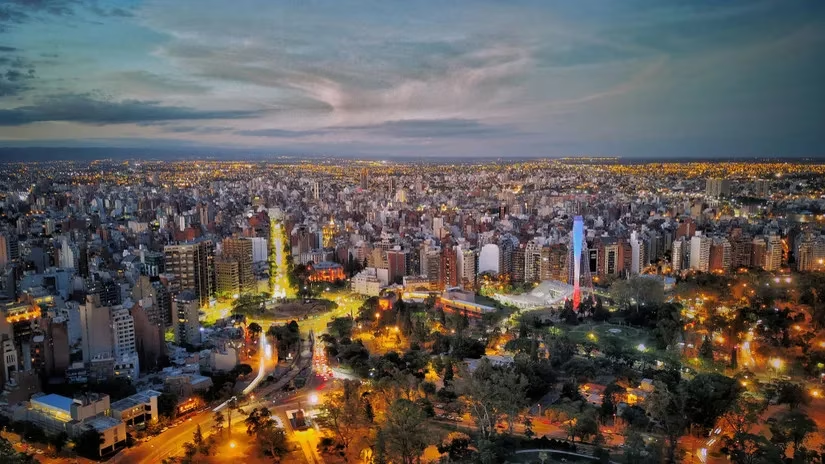
Brazil’s Salvador offered vibrant Afro-Brazilian culture, beaches, and meals in the $5–$10 range. I worked from a café with a view of colorful colonial buildings, and after 5 p.m., I joined the samba circles. Wi-Fi at 52 Mbps kept my Zoom calls stable.
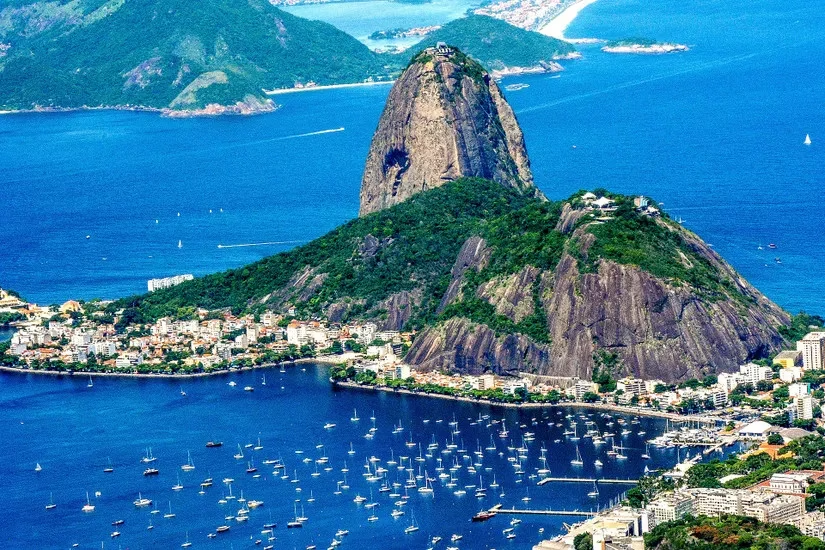
Chile surprised me with its modernity. In Santiago, Wi-Fi reached an incredible 249.82 Mbps—the fastest I encountered. Meals were $5–$10, and the Andes backdrop inspired me daily. I took weekend trips to Patagonia without breaking the bank.

South Africa’s Durban gave me ocean views and a rich cultural mix. Meals averaged $5–$10, though Wi-Fi at 36.46 Mbps occasionally tested my patience. But the beach sunrises more than compensated.
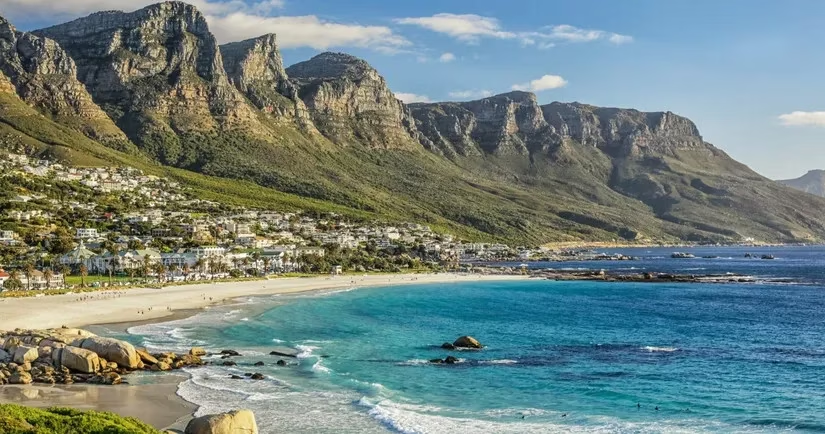
I finished my year in Eastern Europe. Poland’s Poznań was a hidden gem: fast Wi-Fi (172.86 Mbps), hearty $10–$20 meals (still affordable), and a medieval old town straight out of a fairy tale.
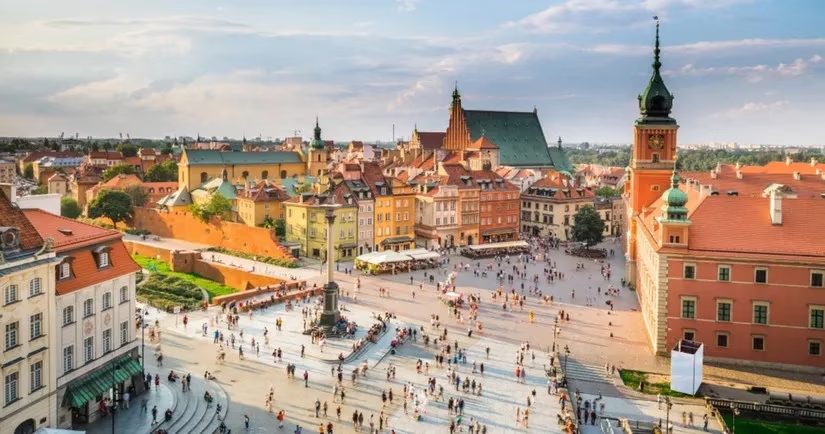
Hungary’s Szeged wrapped up my journey with its thermal baths and low costs—$5–$10 meals and a relaxed pace that let me reflect on how much I’d saved and seen.

As 2026 winds down, I’m convinced that the digital nomad lifestyle isn’t about earning more, but spending smarter. These ten countries proved you can live richly on less than $1,000 a month—with memories that no office bonus could ever buy.
Loading comments...