It was July 2026 when Emma, a schoolteacher from Chicago, finally decided to act on her years-long dream of visiting Scottsdale, Arizona. She had heard the stories — glittering pools framed by towering palms, spa days that melted away stress, and hiking trails weaving through red rock canyons. But every time she pulled up travel blogs, the price tags made her wince. $400-a-night resorts. $50 brunches. Could a week in this desert oasis really fit into her $2,000 budget? Emma was determined to find out.

The answer came wrapped in a scorching 105-degree heat wave that would have sent most vacationers running for ice baths. Scottsdale’s high season runs from November through April, when winter-weary travelers from colder climates flock to its 70-degree sunshine. By July, however, the desert bakes and the crowds thin out — which, Emma discovered, was the secret to unlocking the city without breaking the bank. She booked her flight to Phoenix Sky Harbor, just a 15-minute drive from Scottsdale’s pristine streets, and began scouring hotel websites for summer deals.
What she found astonished her. The Hotel Valley Ho, a retro-chic landmark that once hosted Marilyn Monroe and Frank Sinatra, was offering rooms for as low as $183 a night. Even more budget-stretching was The Scottsdale Resort & Spa, part of Hilton’s Curio Collection, where off-season rates dipped to $131 per night. During the winter, these same rooms could easily cost two or three times as much. Emma did the math: a seven-night stay at $150 a night on average ate up just over half her budget, leaving plenty of wiggle room for meals and adventures. She pictured herself lounging by a pool, and the image of the Andaz Scottsdale Resort’s shimmering water sealed the deal.
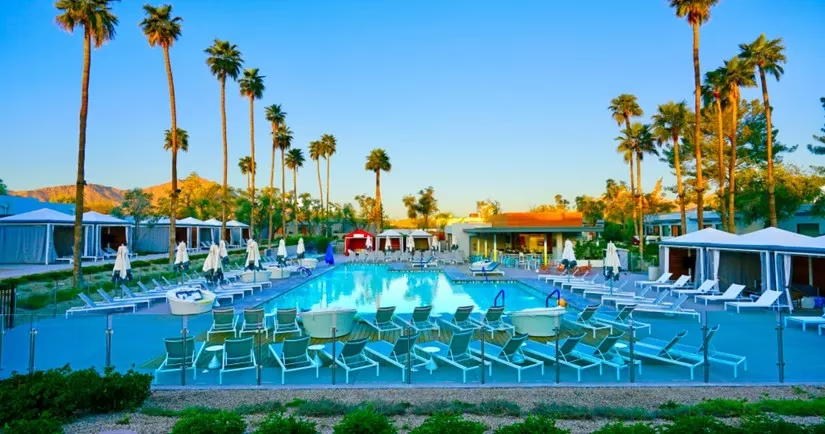
But choosing a hotel wasn't just about the nightly rate; Emma learned to look for resorts that packed in freebies. The Phoenician Scottsdale, for instance, was known for its complimentary movies, trivia pool games, and craft classes. Even its paid mixology sessions or water-bottle customizing workshops cost far less than a dinner out. She bookmarked The Scott Resort and Spa when she read about its vintage 1957 Chevrolet Bel Air convertible that shuttles guests around Old Town in style — free of charge. Loaner bikes, morning yoga, and guided nature walks turned the guest experience into a value-packed stay. For Emma, who didn't mind trading room-service extravagance for a resort with built-in entertainment, this approach was a game-changer.

Still, after comparing all the options, Emma decided she didn’t need the over-the-top glamour if it meant she could eat in more interesting restaurants and shop for souvenirs on Main Street. She turned her attention to no-frills but perfectly comfortable chains: a Rodeway Inn, SureStay Plus by Best Western, or Quality Inn and Suites could easily run under $100 a night during summer weekends. She even considered staying just outside Scottsdale — in Mesa or Tempe — where hotels often undercut their upscale neighbors by 20% while sitting only a few minutes from the action. With the lodging sorted, her budget spreadsheet showed nearly $700 left for everything else.
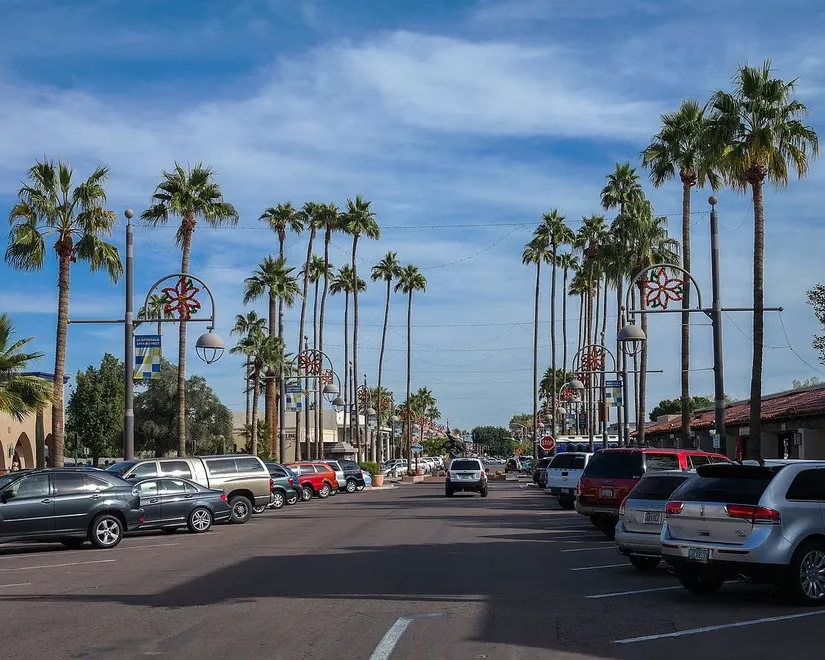
The next surprise hit Emma when she explored what she could do for free. No visitor to Scottsdale can ignore Camelback Mountain, its profile looming like a sleeping giant over the valley. The hike to the summit is challenging, the views unbeatable — and the experience costs nothing. Equally free were the trails at Pinnacle Peak Park and the sprawling McDowell Sonoran Preserve, where rangers lead complimentary guided hikes and bike rides through cactus-studded landscapes. Emma scribbled a list: the public art walking tour through Old Town’s outdoor sculptures, the summer concert series at the Scottsdale Civic Center, and the splash pads scattered across the city — designed for kids but utterly refreshing for an adult after a dusty hike. For museum lovers, many institutions offered free-admission days or reciprocal memberships with other zoos and museums across the country, another stroke of luck for Emma, who carried a membership card from her hometown science center.

All that exploring worked up an appetite, and dining in Scottsdale can drain a wallet fast. Emma crafted a clever food strategy. She booked a room with a small refrigerator and microwave, then stopped by a grocery store on her first day to stock up on breakfast staples, sandwich fixings, and bottled water. Instead of a $20 sit-down omelet, she grabbed fresh pastries and coffee from a local bakery — aromatic and half the price. For lunch and dinner, she hunted out casual eateries where tacos, burgers, or grain bowls hovered around $10. She discovered that many restaurants advertised kids-eat-free nights, and while she didn’t have children, the tip landed in her mental notebook for future trips with friends. She and a fellow traveler she met at a hostel shared appetizers and entrees one evening, halving the bill. Alcohol was the real budget killer, so Emma limited her cocktails to one at a rooftop bar during sunset and sipped supermarket seltzers by the pool the rest of the week.
By the time Emma boarded her plane back to Chicago, she had experienced Scottsdale's upscale charm in full — the spa-like resort pools, the rugged desert hikes, the vibrant arts scene, and the flavorful food — all while staying resolutely under her $2,000 ceiling. She even had $83 left over, which she spent on a hand-painted ceramic mug from a gallery on Main Street, a souvenir that would remind her that luxury doesn’t always come with a four-digit price tag. Sometimes it just takes a little desert heat, a savvy travel plan, and the willingness to see a city through a budget-savvy lens.
Loading comments...