As I lace up my boots for another season on America's trails in 2026, the familiar mix of anticipation and caution returns. Summer is in full swing, and the national parks are buzzing with life—both human and wild. From the Pacific Northwest to the Rocky Mountains, millions of us are heading outdoors, sharing these magnificent landscapes with their native inhabitants. Among these, one creature consistently captures our awe and, let's be honest, our anxiety: the bear. With both black and grizzly bears roaming across the country, knowing how to coexist safely isn't just a skill—it's a necessity for every modern adventurer. The question isn't if you'll venture into bear country, but how you'll prepare for it.
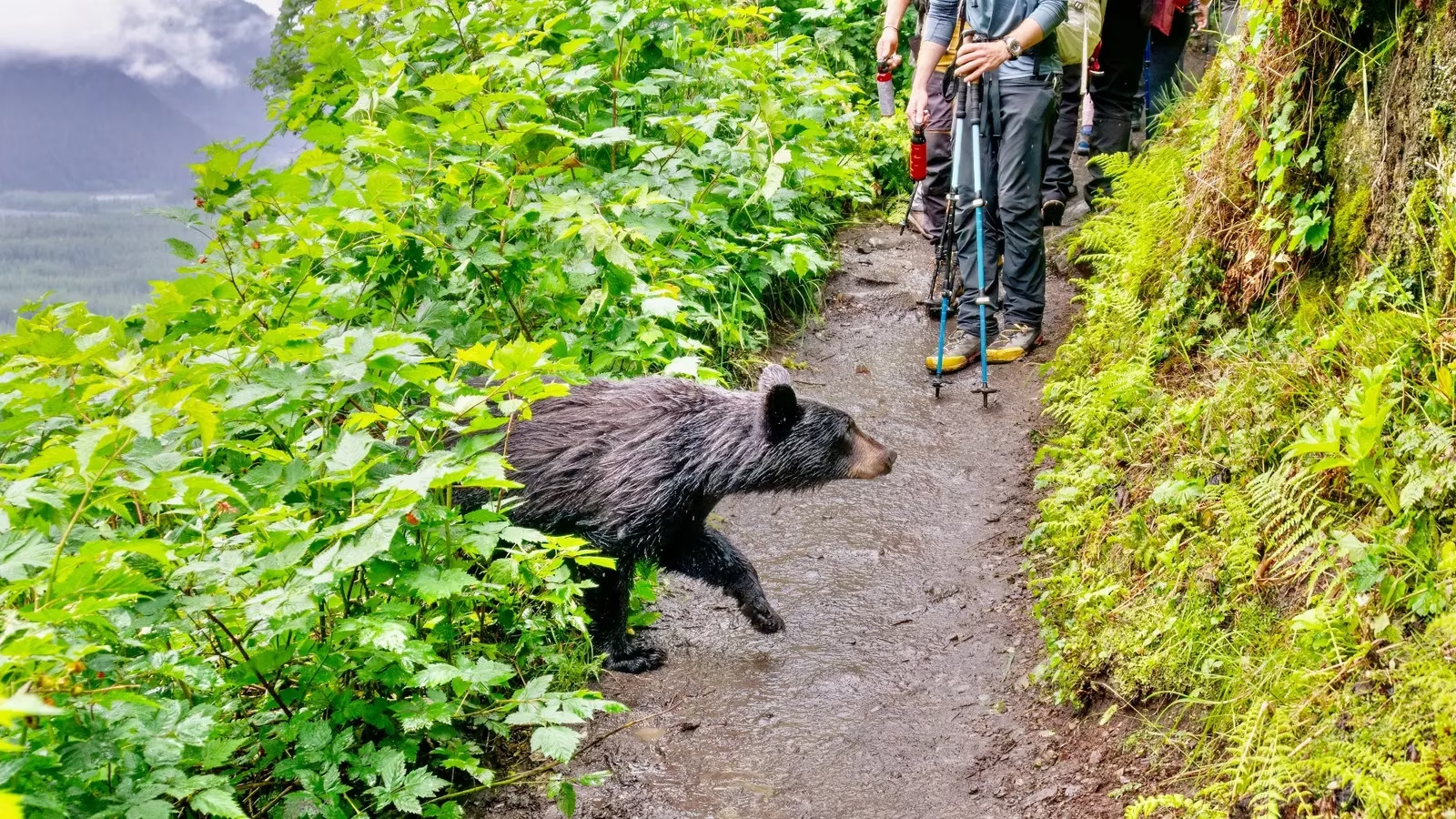
The Fundamental Rule: Know Your Bear
The first and most critical lesson is one that could save your life: black bears and grizzly bears require completely different responses during an encounter. Confusing the two is a recipe for disaster. According to long-standing National Park Service guidelines, which remain vital in 2026:
-
If charged by a black bear: Your goal is to retreat. Move away carefully and calmly toward a vehicle or other secure shelter. Do not play dead.
-
If charged by a grizzly bear: Your strategy shifts dramatically. Play dead. Lie flat on your stomach, protect the back of your neck with your hands, and spread your legs to make it harder for the bear to flip you over. Remain still until you are certain the bear has left the area.
In both scenarios, the initial goal is de-escalation. Make yourself known with calm, loud noises, try to appear larger by waving your arms slowly, and give the bear a wide berth by backing away sideways—a less threatening movement. Remember, your backpack can be a useful distraction; if needed, drop it to create a diversion while you move to safety.
Why Do Bear Encounters Turn Dangerous?
It's a myth that bears are inherently aggressive toward humans. In reality, most want nothing to do with us. So, what triggers conflict? We often unintentionally become an obstacle.
Consider this: What happens if you block the path between a bear and its next meal, or, far worse, between a mother and her cubs? The bear's peaceful demeanor can vanish. In 2026, with trail cameras and visitor data being more advanced than ever, we understand that most negative interactions stem from these scenarios. We are visitors in their home, and respecting their space and priorities is non-negotiable.
Strategic Planning: Avoiding High-Risk Areas
Why wander blindly into a bear's dining room? One of the smartest strategies is to avoid known bear hotspots, especially during their most active feeding times at dawn and dusk. For years, trails like the Huckleberry Trail in Glacier National Park have been famous (or infamous) for high bear activity due to the abundant berry bushes. In 2026, many parks offer real-time wildlife activity alerts via official apps—use them! Planning your hike isn't just about distance and elevation; it's about situational awareness.
The Power of Presence: Don't Hike Alone
I love the solitude of a solo trek as much as anyone. But in bear country, it's a risk multiplier. Why?
-
Noise is a deterrent. A group naturally makes more noise, alerting bears to your presence from a distance and giving them time to move away.
-
Size matters. A group appears larger and more intimidating to a bear assessing a potential threat.
-
Safety in numbers. If an injury occurs, having a partner is your direct link to help. A solo hiker in distress has far fewer options.
Trust Your Gut: The Unseen Warning Signs
This isn't folklore; it's evolutionary biology. Humans have instincts designed to sense danger. On the trail in 2026, I've learned to listen to more than just my podcast. If the forest suddenly falls silent—birds stop chirping, squirrels vanish—it's a universal sign that a larger predator may be near. That creeping feeling of being watched? Don't ignore it. These subtle environmental cues are often your first warning system before you ever lay eyes on a bear.
Gear Up: Your Bear Safety Toolkit
Just as you wouldn't hike without water, venturing into bear country requires specific gear. The essentials for 2026 remain:
| Tool | Purpose | Key Consideration |
|---|---|---|
| Bear Spray | A potent, non-lethal deterrent for a charging bear. | Check local laws! It's illegal in some areas, like certain California parks. Always carry it accessible, not buried in your pack. |
| Bear Bell / Noisemaker | Announces your presence to avoid surprising a bear. | A simple, effective preventative tool for routine hiking. |
| Bear-Resistant Container | Stores food and scented items (toothpaste, deodorant) odor-free. | Mandatory in many parks. Never store these items in your tent. |
The Food Factor: A Major Attractant
Ask any ranger: food is the root of most bear problems. A bear's superb sense of smell can detect snacks from miles away. Proper food management is your responsibility:
-
Use approved bear lockers or hang food properly in a tree, far from your sleeping area.
-
Pack out ALL trash, including fruit peels and nut shells.
-
Cook and eat at least 100 yards downwind from your tent.
An Unconventional Tip: Talk to the Bear
It sounds strange, but it's official advice. If you spot a bear at a distance, speak calmly and firmly. This does two things: it clearly identifies you as a human (not prey), and it helps you control your own breathing and fear. A calm, confident demeanor, even if faked, can positively influence the encounter.
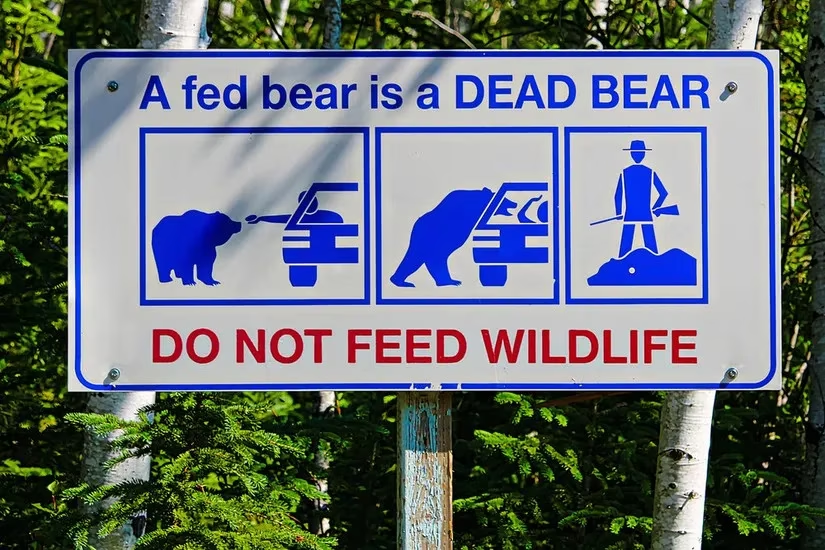
The Golden Rule: Never, Ever Feed Wildlife
This should be obvious, but incidents still occur every year. Feeding a bear—or any wildlife—is catastrophic. It teaches them to associate people with food, leading to aggressive behavior and often the bear's euthanasia. The injuries from a "friendly" deer seeking more handouts can be severe; with a bear, the consequences are tragic. Our role is to observe, not interact. As we enjoy these wild spaces in 2026 and beyond, let's commit to being informed, prepared, and respectful guests. After all, a safe hike is a hike you get to remember—and repeat.
Loading comments...