Japan in 2026 continues to enchant solo travelers with its seamless blend of ancient tradition and futuristic flair. Yet, a persistent myth keeps many from booking that flight: the idea that exploring the Land of the Rising Sun alone is a luxury reserved for the wealthy. Is Tokyo really as prohibitively expensive as its reputation suggests? And can a budget-minded adventurer genuinely savor the country’s depth without constant financial anxiety? The answer is a resounding yes—if you know where to look. While it’s true that bullet trains and Michelin-starred sushi can drain a wallet quickly, Japan is also packed with free shrines, modestly priced UNESCO sites, and vibrant neighborhoods where a few hundred yen can buy an unforgettable memory.
This isn’t about skipping the highlights; it’s about rediscovering them through a savvy lens. From the vermilion gates of Kyoto to the humming streets of Osaka, here are ten experiences that prove solo travel in Japan can be profoundly rewarding and surprisingly affordable.
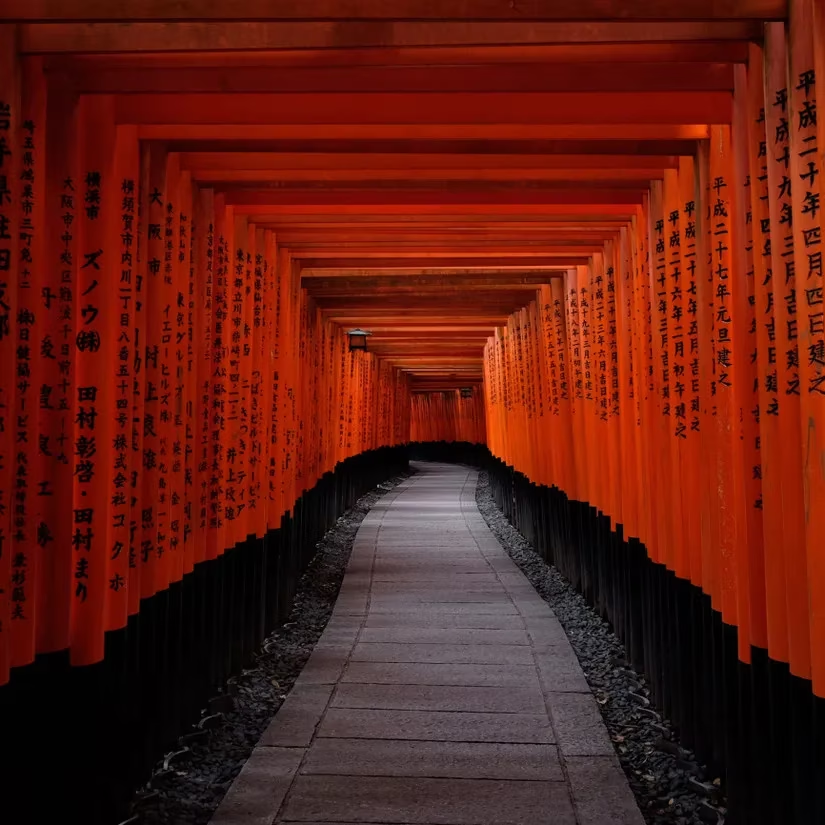
Kyoto’s Timeless Pathways: Fushimi Inari Taisha and Kinkakuji
Have you ever dreamed of wandering through a corridor of 10,000 torii gates without spending a single yen? At Fushimi Inari Taisha in southern Kyoto, that dream becomes reality. This Shinto shrine, dedicated to the deity of rice and prosperity, charges absolutely nothing for entry. Solo hikers can follow the bright orange gates up the wooded slopes of Mount Inari, catching panoramic city views at the summit. The moderate hike is perfect for some reflective exercise. Afterwards, budget-friendly family-run eateries near the trailhead sell grilled wagyu sushi rolls for just a few coins—proof that taste doesn’t require a trust fund. A quick bus ride away, the Tofukuji Temple and the geisha-studded Gion district offer additional free or low-cost windows into traditional Japan.
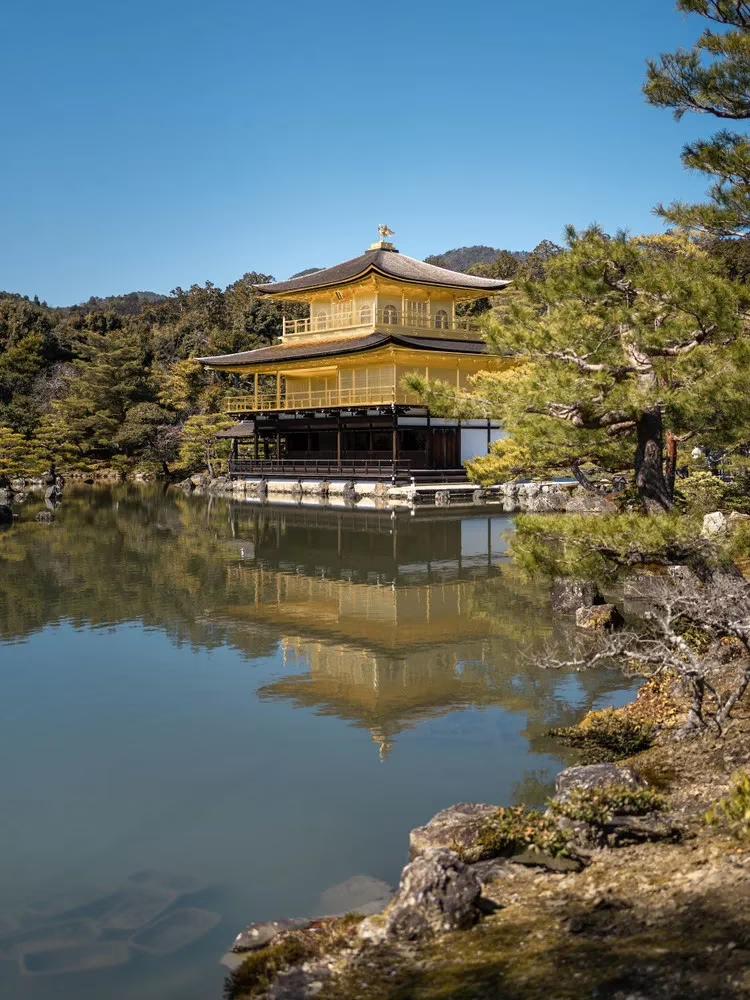
Just across town in Northern Kyoto, the Kinkakuji Temple, or Golden Pavilion, gleams as if plucked from a fairy tale. The admission fee hovers around $4 USD, a pittance for the serene gardens and the mirror-like pond reflecting the gold-leafed structure. Why pay a fortune for a luxury hotel when you can stand in the presence of such opulence for next to nothing? Nearby, the Kitano Tenmangu Shrine—free to enter—adds another layer of historical depth without touching your budget.
Moments of Reflection: Hiroshima Peace Memorial Park and Kiyomizu-dera
It’s a common misconception that Hiroshima is still radioactive; it isn’t. What the city does radiate is a powerful message of resilience. At the Hiroshima Peace Memorial Park, solo travelers can enter the profoundly moving museum for approximately $2 USD. Several hours spent here will reshape your understanding of modern history without distorting your travel budget. After absorbing the exhibits, the nearby Shukkei-en Garden—a miniature landscape of miniature forests and tea houses—offers a tranquil escape for just a few hundred yen.
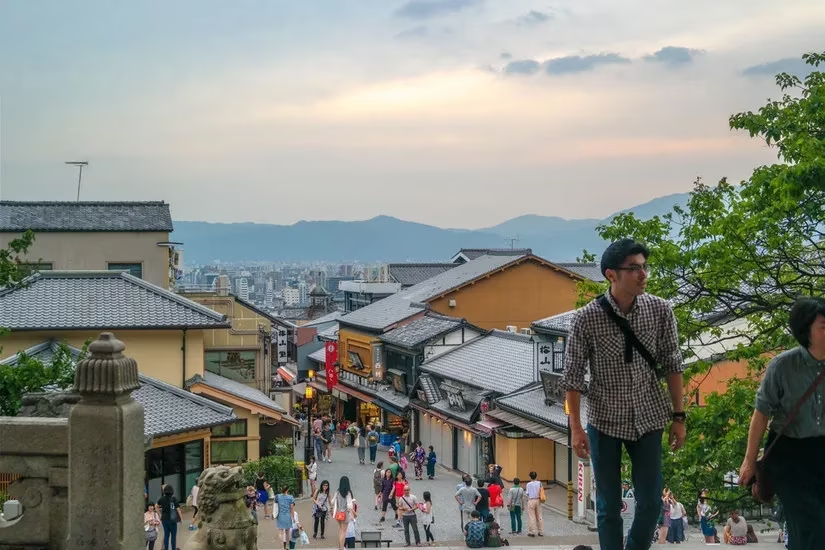
Back in Kyoto, the UNESCO-listed Kiyomizu-dera Temple charges a modest $3 USD admission. Perched on a hillside, its iconic wooden stage delivers a view that has remained essentially unchanged for over a millennium. Is it worth that price to stand where generations of pilgrims have stood? Undoubtedly. The surrounding lanes, brimming with pottery shops, allow you to pick up a handcrafted teacup far cheaper than any department-store souvenir. For an extra cultural deep-dive, slip into the discreet Sannenzaka Museum, Japan’s first museum dedicated to traditional decorative arts.
Neon Nights and Ancient Temples: Dotombori and Senso-ji
Could a solo night out in Japan actually rival the cost of a similar evening back home? In Osaka’s Dotombori District, the answer might surprise you. This neon-lit canal-side zone is Japan’s street-food capital. A conservative spender can feast on takoyaki, okonomiyaki, and kushikatsu for far less than $100 USD total, all while soaking up the electric atmosphere under the famous Glico Running Man sign. The real savings trick, though, is the Japan Rail Pass; a 7-day unlimited pass costing under $400 USD pays for itself after a handful of intercity journeys, eliminating the shock of individual bullet-train tickets. Just a short walk away, the fully restored Osaka Castle can be explored for a few dollars, blending perfectly with a night of affordable indulgence.
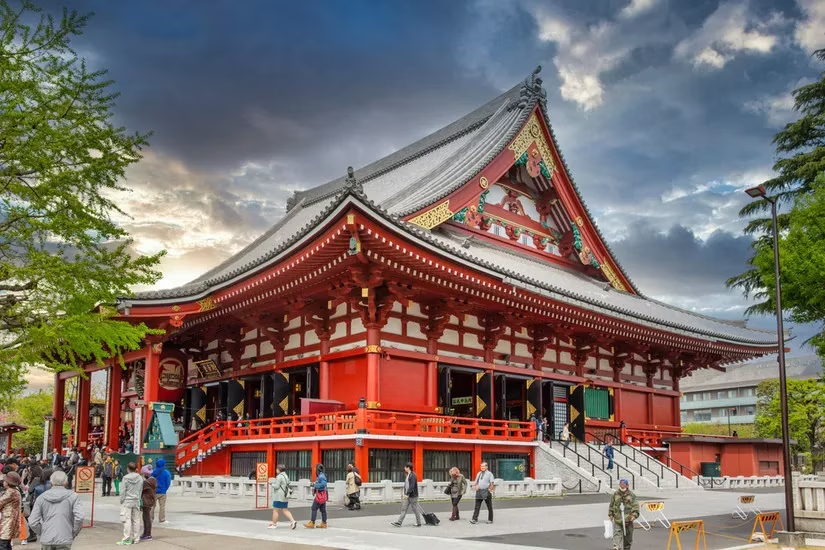
Tokyo’s oldest temple, Senso-ji in Asakusa, is another glorious zero-dollar experience. Founded in the 7th century, its approach street, Nakamise-dori, is a sensory overload of traditional snacks, paper fans, and 100-yen shops—Japan’s version of dollar stores. Savvy solo travelers know that a 100-yen shop is an essential stop for drinks, toiletries, and even quirky souvenirs. From Senso-ji, look up: the Tokyo SkyTree tower isn’t free, but its observation decks offer a reasonably priced way to survey the world’s largest metropolis.
Deer, Gardens, and Imperial Spirits: Todai-ji, Shinjuku Gyoen, and Meiji Jingu
Just a short train ride from Kyoto lies Nara, a city where sacred deer roam freely in Nara Park. For about $6 USD, solo travelers can enter Todai-ji Temple and stand dwarfed by the Daibutsu, one of Japan’s largest bronze Buddha statues. The sight of this 15-meter-tall figure inside the world’s largest wooden building is worth every yen. Instead of renting a car, rent a bicycle—it’s far cheaper and lets you coast past Lake Kagami-ike or up to the grassy slope of Mt. Wakakusa for a sunset that needs no filter.
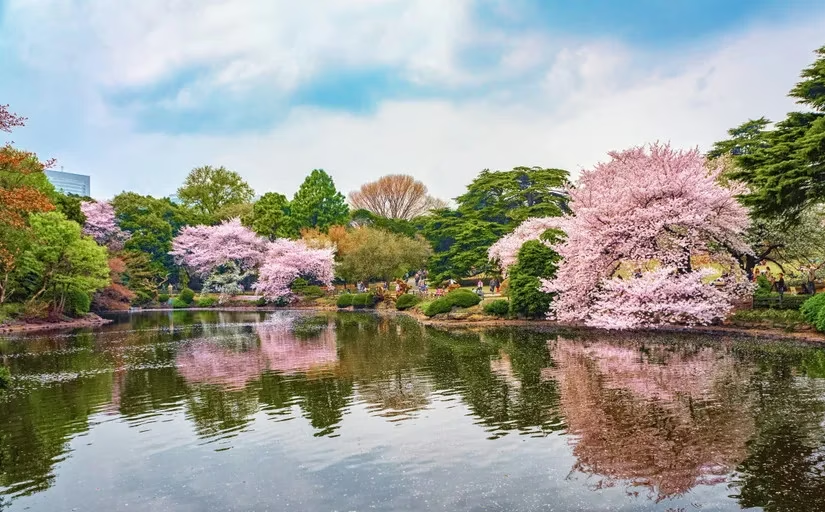
Back in Tokyo, Shinjuku Gyoen National Garden combines three distinct landscaping styles—Japanese, English, and French—for a mere $4 USD entrance fee. In spring 2026, the cherry blossoms here are as ethereal as ever, and in autumn the maple leaves set the park ablaze. After your stroll, the nearby Tokyo Metropolitan Government Building offers a cost-free observation deck; it’s a classic budget hack that still delivers sweeping panoramas of Shinjuku’s skyscraper forest. Nearby, izakaya alleys serve yakitori sticks and draft beer for pocket change.
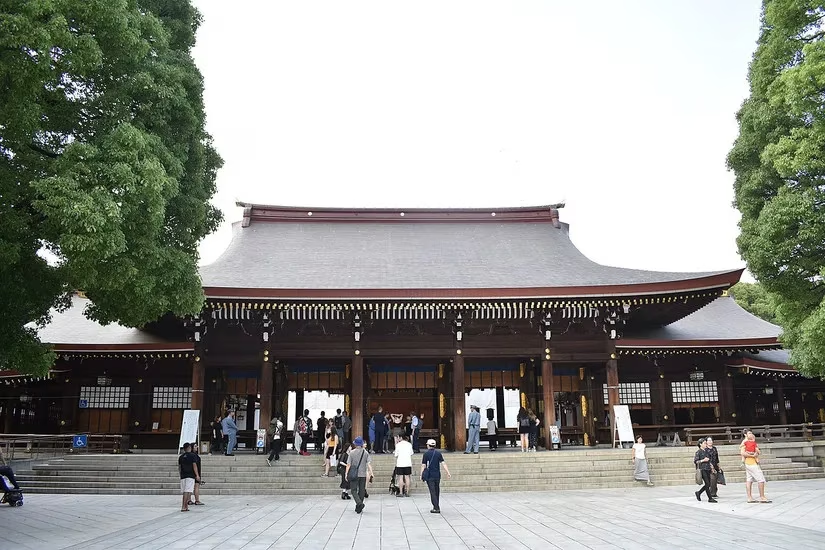
For a moment of forested calm, Meiji Jingu Shrine, tucked inside Tokyo’s Shibuya ward, costs zero. The broad, tree-lined path absorbs the sound of the city as you approach the shrine dedicated to Emperor Meiji and Empress Shoken. After offering a coin and a bow, why not reward yourself with a visit to one of Tokyo’s quirky animal cafes? An owl cafe near the shrine provides a gentle decompression session. Accommodation costs too high? Couchsurfing remains a viable and legal way for solo travelers to find a free bed and local friendship in 2026.
The White Heron’s Grandeur: Himeji Castle
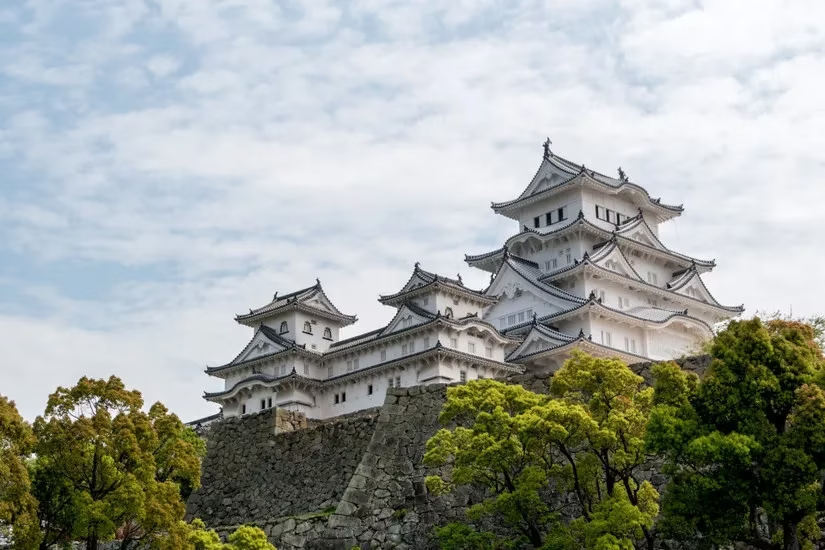
Finally, journey west to Himeji to witness the finest surviving example of Japanese castle architecture. Himeji Castle, nicknamed the White Heron Castle, requires a $9 USD admission, and stepping inside its pristine wooden interiors from the 14th century feels like time travel. The adjacent Kokoen Garden is another affordable gem, and the Himeji City Zoo can be visited for just a couple of dollars—making a full day of exploration remarkably cheap. Willer night buses, with reclining seats and eye masks, can whisk you back to Tokyo while you sleep, saving both travel time and a night’s hotel cost.
Solo travel in Japan need not be an exercise in financial stress. By prioritizing the right destinations—where history, beauty, and culture come cheap—you can spend your days immersed in wonder and your evenings savoring ramen without guilt. The real secret isn’t that Japan is expensive; it’s that the most memorable experiences often carry the smallest price tags.
Loading comments...